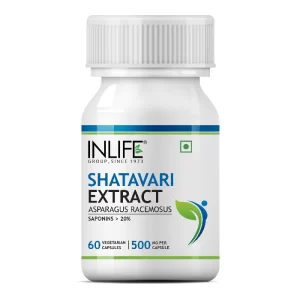


Shatavari is one of the most valued herbs in Ayurveda. It is widely known for its role in women’s health, hormonal balance, and overall body strength. For centuries, this root has been used as a daily herbal support for the reproductive system, digestion, immunity, and stress control.
This guide explains everything you need to know about Shatavari in a clear and simple way—what it is, how it works, its benefits, how to use it correctly, and important safety information.
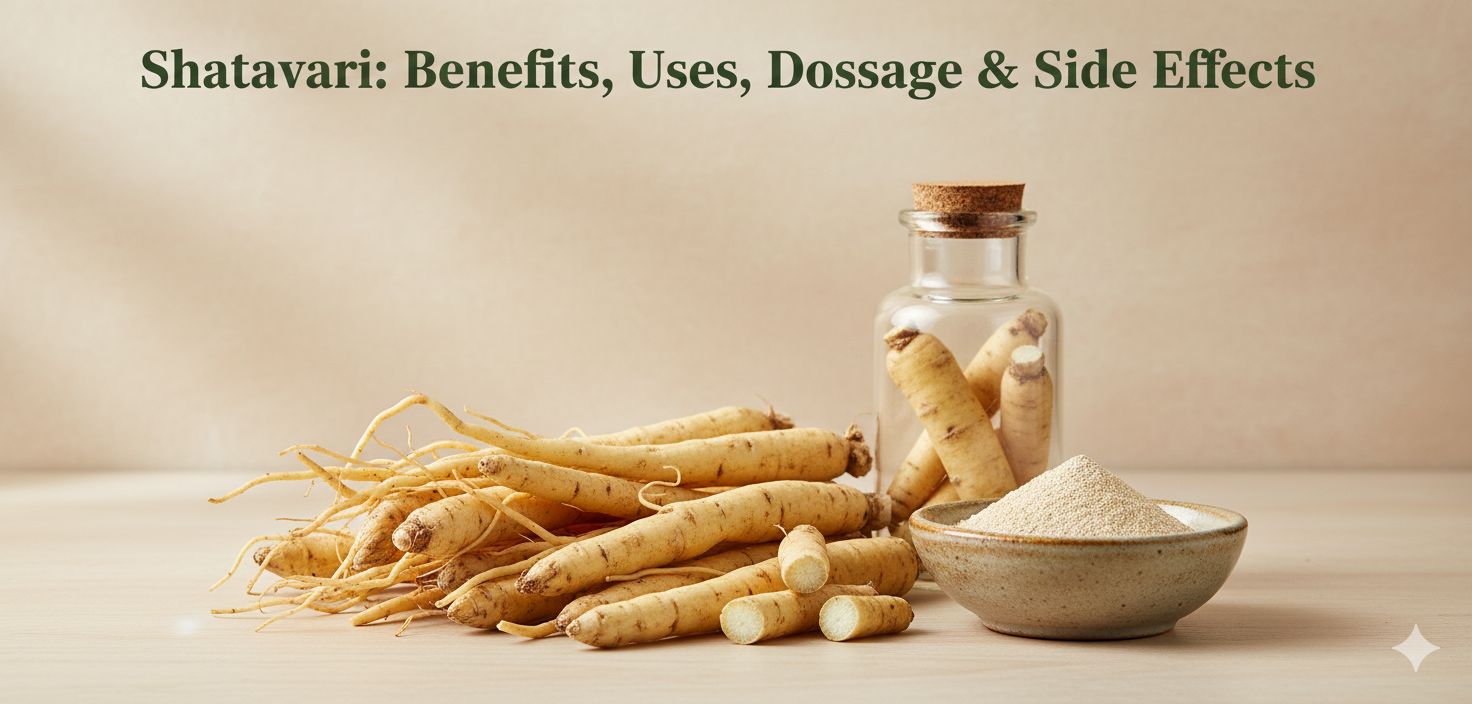
Image Credit: Gemini
Shatavari is a climbing plant that belongs to the asparagus family. Its botanical name is Asparagus racemosus. The main part used for herbal purposes is the root.
In Ayurveda, Shatavari is classified as a Rasayana herb, which means it is traditionally used to support long-term health, strength, and balance in the body. The name “Shatavari” means “she who possesses a hundred husbands,” pointing to its traditional role in supporting female vitality and reproductive health.
The root is dried and processed into powder, capsules, tablets, or liquid extracts for herbal use.
According to Ayurveda, Shatavari helps balance Pitta and Vata doshas. It has a cooling nature, which makes it suitable for people who experience excess heat, irritation, dryness, or hormonal imbalance.
Traditionally, Shatavari has been used to:
It is often recommended as a long-term herbal addition rather than a short-term remedy.
Shatavari root contains several natural plant compounds that support its herbal properties. These include:
These compounds work together to support balance in the body rather than targeting one single issue.
Shatavari is best known for its role in women’s wellness. It is commonly used to support:
Many women use Shatavari as part of their daily herbal routine during different life stages.
Shatavari contains natural plant compounds that help the body adapt to hormonal changes. It is commonly used during:
Its cooling and nourishing nature helps the body adjust to internal shifts over time.
In traditional herbal practice, Shatavari is widely used to support breast milk production. It is often included in post-pregnancy herbal blends for nursing mothers.
Shatavari has a soothing effect on the digestive system. It helps:
The mucilage content in the root helps protect and calm the digestive tract.
Shatavari is traditionally used to support immune strength. Its antioxidant compounds help protect the body from daily stress and environmental factors.
Shatavari is considered an adaptogenic herb. This means it helps the body adjust to physical and emotional stress. Regular use may support:
Although mostly known for women, Shatavari is also used in men to support:
It is often combined with other herbs in men’s wellness formulas.
Shatavari is available in different herbal forms. The choice depends on personal preference and routine.
General herbal dosage guidelines:
Best time to take Shatavari:
Consistency is important. Shatavari is usually taken for several weeks for noticeable effects.
Shatavari is generally well tolerated when taken in proper amounts. However, some people may experience:
These effects usually occur due to high dosage or sensitivity.
You should be careful with Shatavari if you:
Pregnant and breastfeeding women should use Shatavari only under professional guidance.
Shatavari may not be suitable for:
Always start with a small amount to check tolerance.
Can men take Shatavari?
Yes. It supports strength and vitality in men as well.
How long does Shatavari take to show effects?
Usually 4–6 weeks with regular use.
Can Shatavari be taken daily?
Yes, it is commonly used as a daily herbal support.
Shatavari is a time-tested Ayurvedic herb known for its nourishing and balancing nature. It supports women’s health, hormonal stability, digestion, immunity, and overall strength. When used correctly and consistently, it can become a valuable part of a daily herbal routine.
As with any herb, quality matters. Choose pure, well-sourced Shatavari and follow proper dosage guidelines for best results.