Fiber is an important part of a healthy diet, but many people do not get enough fiber from food alone. This can lead to digestive issues, irregular bowel movement, and difficulty managing weight and blood sugar levels. Because of this, many people choose fiber supplements.
There are several types of fiber supplements available today. Psyllium husk, inulin, oat bran, and flaxseed are some of the most common options. Each type of fiber works in a different way and suits different needs.
This blog compares psyllium husk with other popular fiber supplements. It explains how each one works, their benefits, and how to choose the right fiber supplement based on your personal goals.
Fiber supplements support daily nutrition, but they should not replace fiber-rich foods such as fruits, vegetables, and whole grains.
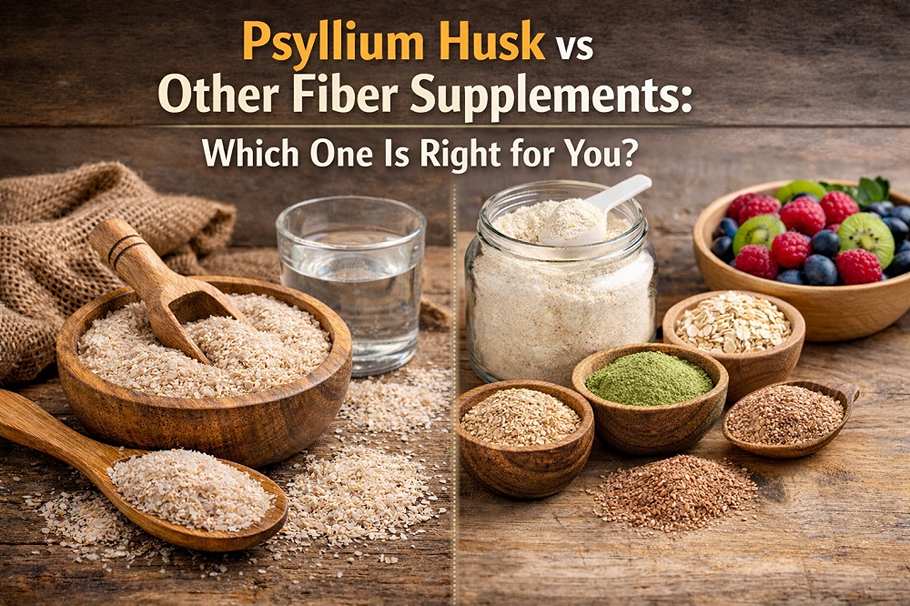
Image Credit: ChatGPT
Fiber supplements mainly fall into two categories: soluble fiber and insoluble fiber. Some supplements contain a mix of both.
Every fiber supplement works differently. What suits one person may not suit another, so results can vary based on digestion and tolerance.
Psyllium husk is a soluble fiber obtained from the seeds of the Plantago ovata plant. When mixed with water, it forms a thick gel. This gel helps slow digestion, supports bowel movement, and helps control hunger.
Psyllium husk is commonly used for digestion, cholesterol control, blood sugar balance, and weight management.
Note: Psyllium husk absorbs a large amount of water. Always mix it with enough liquid and consume it immediately to avoid discomfort.
Inulin is a soluble fiber found in foods like chicory root, garlic, and onions. It dissolves in water and feeds beneficial gut bacteria.
Inulin supports gut health but may cause gas or bloating in some people, especially when taken in large amounts.
Note: Inulin may cause gas or bloating, especially for people with sensitive digestion. Start with a small amount to check tolerance.
Oat bran comes from the outer layer of oats. It contains both soluble and insoluble fiber. Oat bran supports digestion and heart health.
It is often added to cereals, smoothies, and baked foods.
Note: Oat bran works best when taken regularly with meals and enough fluids to support digestion.
Flaxseed contains both fiber and healthy fats. It can be consumed whole, ground, or as oil.
Flaxseed supports digestion and provides plant-based fats, but it must be taken in enough water to avoid discomfort.
Note: Flaxseed should be taken ground and with sufficient water. Whole flaxseed may pass through the body without full digestion.
If constipation continues for a long time, fiber supplements alone may not be enough. Dietary habits and hydration also play an important role.
Fiber supplements help control appetite, but weight management depends on balanced meals and regular physical activity.
Note: People with diabetes should monitor blood sugar levels regularly when adding any fiber supplement to their routine.
Choosing the right fiber supplement depends on your personal needs and health goals.
If constipation or irregular bowel movement is your main concern, psyllium husk is often the most effective option.
If improving gut bacteria is your main goal, inulin may be useful, but start with a small amount.
Psyllium husk and oat bran are good options for cholesterol control.
Psyllium husk is suitable because it creates fullness without adding calories.
Note: If you have ongoing digestive issues or chronic conditions, choosing a fiber supplement should be done with professional guidance.
Note: If you are taking regular medication, take fiber supplements at least 1–2 hours apart to avoid reduced absorption.
Psyllium husk is one of the most versatile fiber supplements available. It supports digestion, heart health, blood sugar balance, and weight management.
Other fiber supplements, like inulin, oat bran, and flaxseed, also have their benefits, but they work differently and may not suit everyone.
Choosing the right fiber supplement depends on your health goals and tolerance. For most people, psyllium husk offers balanced benefits and gentle support when used correctly.
If you experience persistent bloating, pain, or discomfort after using any fiber supplement, stop use and consult a physician.